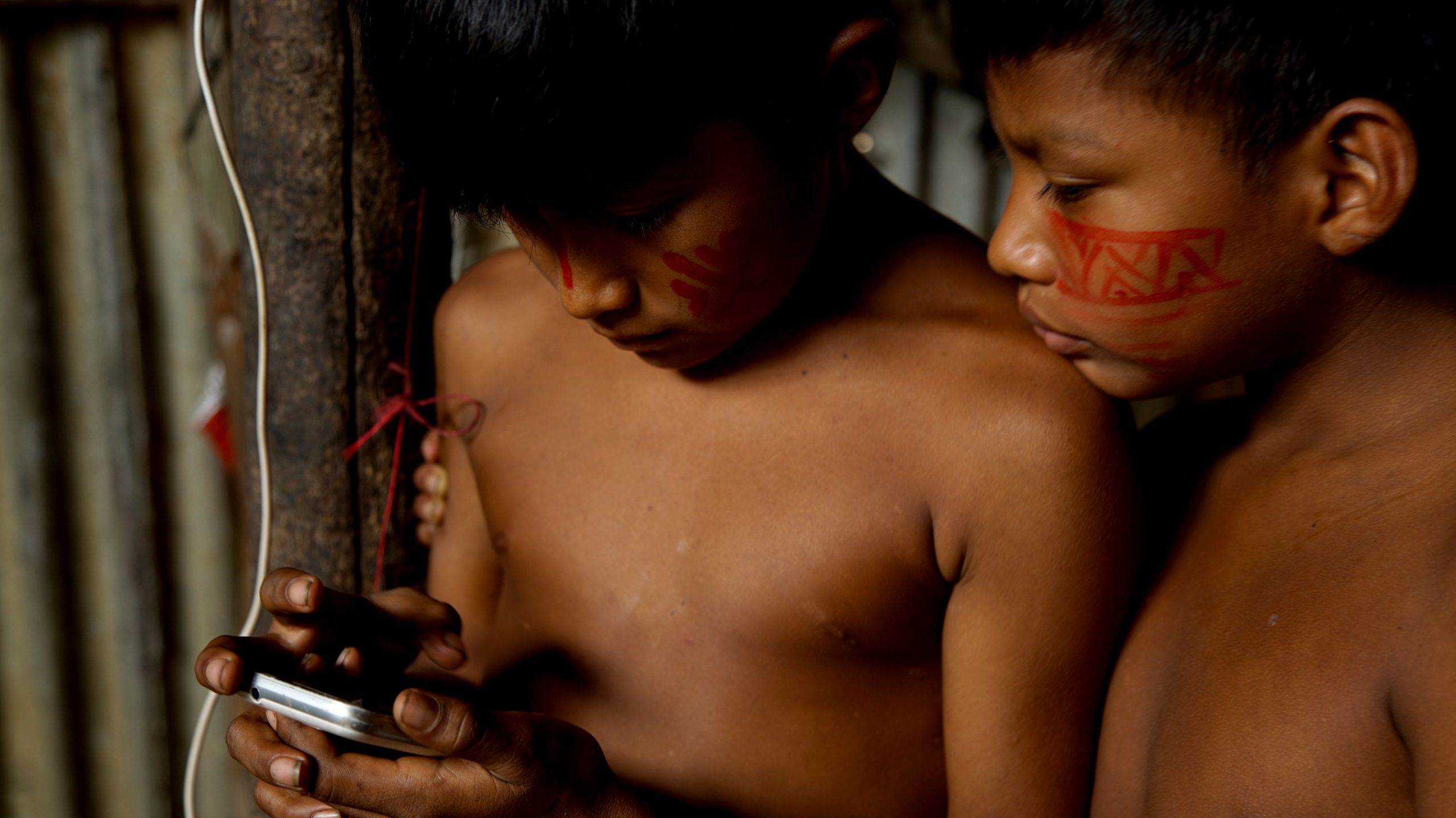
Digital confidence is often mistaken for knowing how to use an app. A young person may edit a polished video and still be unsure what information should stay private, who owns a community story, or what to do when an unfamiliar account sends a threatening message.
For Indigenous youth, those questions carry another layer. Digital spaces can support language, cultural continuity, connection, and self-expression. They can also reproduce extraction: a story, image, recording, or piece of knowledge can be copied, stripped of context, and circulated far beyond the people who gave permission.
The goal, then, is not to keep young people away from technology. It is to help them use it with skill, discernment, cultural responsibility, and real control over their own work. Content planning and online safety belong in the same lesson because every post is also a decision about audience, consent, privacy, and permanence.

Start with voice, not visibility
A common adult instinct is to begin with reach: build a following, post consistently, and make content that performs. That order is backwards for many youth projects. The first question should be: What do we want to say, and who has the right to say it?
The National Collaborating Centre for Indigenous Health’s 2025 digital storytelling guide recommends projects that are Indigenous- and youth-informed, meaningful to participants, accessible, and centred on physical, emotional, and mental safety. That is more than a workshop preference. It changes who makes decisions. Youth can help choose the topic, the format, the language, the audience, and whether the finished story should be public at all. The NCCIH digital storytelling guide offers a useful model for building that process.
I would make one principle explicit at the start of every project: publication is an option, not the measure of success. A private family archive, a classroom presentation, or a community-only screening can be a successful digital story. This protects young people from learning that valuable work is only valuable when strangers can see it.
Teach the content cycle as a decision cycle
Content planning does not need to feel like marketing homework. For a youth group, it can be a short, repeatable process that makes creative choices visible:
- Purpose: What should someone understand, feel, remember, or do after seeing this?
- Audience: Is this for classmates, family, the local community, a public audience, or a specific language-learning group?
- Permission: Who appears, speaks, or contributes knowledge? What consent is needed, and can anyone change their mind?
- Format: Would a photo essay, audio clip, short video, poster, captioned slideshow, or written post communicate the idea best?
- Review: Could the content reveal a location, routine, identity, sacred knowledge, or another person’s private information?
- Publish or pause: Where will it live, for how long, and who can remove it if circumstances change?
A simple shared calendar can help a group see the whole project without turning young people into content machines. A content planner can be useful for mapping drafts, review dates, captions, and publishing decisions, but the tool should serve the group’s protocol. It should never decide that a post is ready simply because a date has arrived.

Make consent specific, reversible, and understandable
“Do you give permission?” is too vague for a digital project. Consent should name the activity and the possible audience. A young person might agree to be photographed for a private workshop but not to have the image posted publicly. Someone might approve a video today and want it removed later.
For each project, ask participants to decide:
- Whether their name, voice, face, artwork, or location may appear.
- Whether the work can be shared within the community, with a school, or publicly.
- Whether other people’s images, music, language, or family stories have been cleared for use.
- Who holds the original files and who can approve edits.
- How a participant can withdraw permission or request a correction.
The NCCIH guide includes separate consent considerations for participation, publication, images, and copyright. That separation matters because agreement to participate is not automatically agreement to publish. For younger participants, adult consent may also be required, but adult involvement should not erase the young person’s own preferences or ability to ask questions.
Online safety is also data sovereignty
Online safety lessons often stop at strong passwords and blocking strangers. Those are useful habits, but they are only the individual layer. Youth also need language for understanding who collects their data, who stores it, and who can reuse it.
The First Nations Information Governance Centre describes OCAP® as Ownership, Control, Access, and Possession. These principles are specifically First Nations principles, not a universal label for every Indigenous community, and their meaning must be applied according to each Nation’s own worldview and protocols. They provide a powerful teaching prompt: Who owns this information? Who controls its use? Who should have access? Where is it physically held? The First Nations Principles of OCAP® explain that information governance is tied to self-determination, not merely to technical privacy.
For a youth exercise, show the group an ordinary social post and trace its data trail. What does the image reveal? Is location data attached? Does the platform retain the original? Could a screenshot outlive the account? Is a community story being treated as personal content when it actually carries collective responsibilities?
This is where Indigenous digital education can be stronger than generic “internet safety.” It can teach young people to protect themselves while also asking whether a platform’s design respects the community’s authority over knowledge.

The practical safety lesson: rehearse, do not lecture
Children and teens are more likely to remember a response they have practised. Run short scenarios and let them decide what happens next:
- A new account asks for a private photo or wants to move a conversation to another app.
- A friend posts a group image without checking with everyone in it.
- A message claims the student has won a prize and asks for a login or payment.
- A video includes a recognizable home, school route, license plate, or community location.
- A post attracts racist comments, impersonation, threats, or unwanted attention.
- An AI tool produces an image, caption, or “fact” that misrepresents Indigenous people or invents cultural information.
The first response should be simple: stop, save evidence if it is safe to do so, block or report the account, and tell a trusted adult or designated support person. Young people should not be made responsible for investigating serious abuse alone. They also need to hear that asking for help is not the same as getting in trouble.
Build a local response card with the names and contact routes that actually apply to the school, youth centre, Nation, or family. Generic advice fails when a young person does not know which adult will listen, what confidentiality means, or what happens after a report.
Teach critical thinking before teaching “personal branding”
Content planning should include source-checking. Who made this claim? What evidence supports it? Is the account quoting a community member accurately? Is an image being presented without context? What does the platform gain by keeping the viewer angry, afraid, or scrolling?
A 2024 peer-reviewed Canadian review by Buchan, Bhawra, and Katapally identified four connected parts of youth digital literacy: digital fluency; privacy and safety; ethics and empathy; and consumer awareness. The authors also designed the program to be adaptable to culturally diverse and geographically remote communities. The useful insight is the connection between skills that are often taught separately: evaluating information, protecting data, treating people respectfully, and recognizing how platforms profit from attention.
UNICEF’s current guidance on children and AI makes a similar rights-based argument, calling for safety, privacy, inclusion, transparency, and preparation for future developments. A youth workshop does not need to predict every new tool. It should teach durable questions: What is this system doing? What information is it using? Who may be harmed? What control do I have? Who can I ask for help?

A workable workshop plan
A four-session sequence can give families, schools, and community programs a practical starting point:
- Story and audience: Youth choose a topic connected to place, language, wellbeing, art, or community life and identify the audience they want to reach.
- Plan and create: They storyboard the piece, identify sources and permissions, choose a format, and make an early draft.
- Safety and cultural review: A peer or trusted adult checks privacy, consent, accuracy, accessibility, cultural protocol, and possible unintended audiences.
- Share and reflect: Youth decide whether to publish, present privately, or keep the work offline. They record what they would change and how the work can be withdrawn or updated.
Do not treat reliable internet, device access, or technical support as minor details. Research and community evaluations repeatedly identify infrastructure and support as barriers to equitable digital learning. If one student has a current device and another is sharing an unreliable connection, the program should adapt rather than quietly measuring access as individual motivation.
Five questions families and educators can keep asking
What is the most important online-safety skill?
The most important skill is knowing how to pause and seek help before sharing more information. Passwords and privacy settings matter, but they are less useful if a young person feels they must handle a threatening or manipulative situation alone.
Should Indigenous youth avoid public social media?
No. Public platforms can support language, art, advocacy, and connection. The better approach is informed choice: teach youth how to select an audience, protect sensitive information, and decide when public sharing does not serve the story or the community.
How can a youth project respect cultural protocols?
Begin with the relevant Nation, community, family, or knowledge holders rather than assuming one protocol applies everywhere. Ask what can be recorded, who may share it, what language should be used, and where the work may be stored or shown.
Is a private account completely safe?
No. A private account can reduce exposure, but followers can still screenshot, forward, record, or misinterpret content. Privacy is a layer of protection, not a guarantee of control.
How should adults respond when a young person makes a mistake online?
Secure the situation first, then investigate without humiliation. Help the young person remove what can be removed, report harm, repair relationships where appropriate, and understand the decision that led to the mistake. Fear-based punishment can teach secrecy instead of safety.
The outcome is agency, not perfect behaviour
Digitally savvy Indigenous youth are not simply young people who post frequently or know every new feature. They can make and question media. They can protect a friend’s privacy, recognize an extractive platform, ask whether a story is theirs to share, and change course when new information appears.
That is why content planning belongs beside online safety. Both skills teach young people to slow down, name their responsibilities, and make deliberate choices about audience and control. The strongest program will leave them not less visible, but more capable of deciding when, where, and how their voices should be heard.
How this article was put together
This article draws on the 2024 peer-reviewed Canadian digital-literacy program review, the First Nations Information Governance Centre’s OCAP® guidance, the National Collaborating Centre for Indigenous Health’s 2025 digital storytelling guide, and UNICEF guidance on children, online safety, and AI, all checked in October 2026. It treats “Indigenous” as a broad umbrella and therefore avoids presenting one Nation’s protocol as universal. Local cultural authority, consent requirements, reporting routes, and data-governance rules should be confirmed before a program begins.